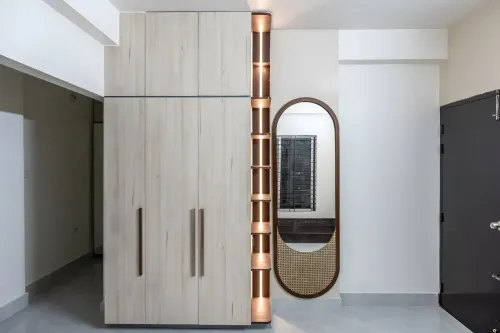
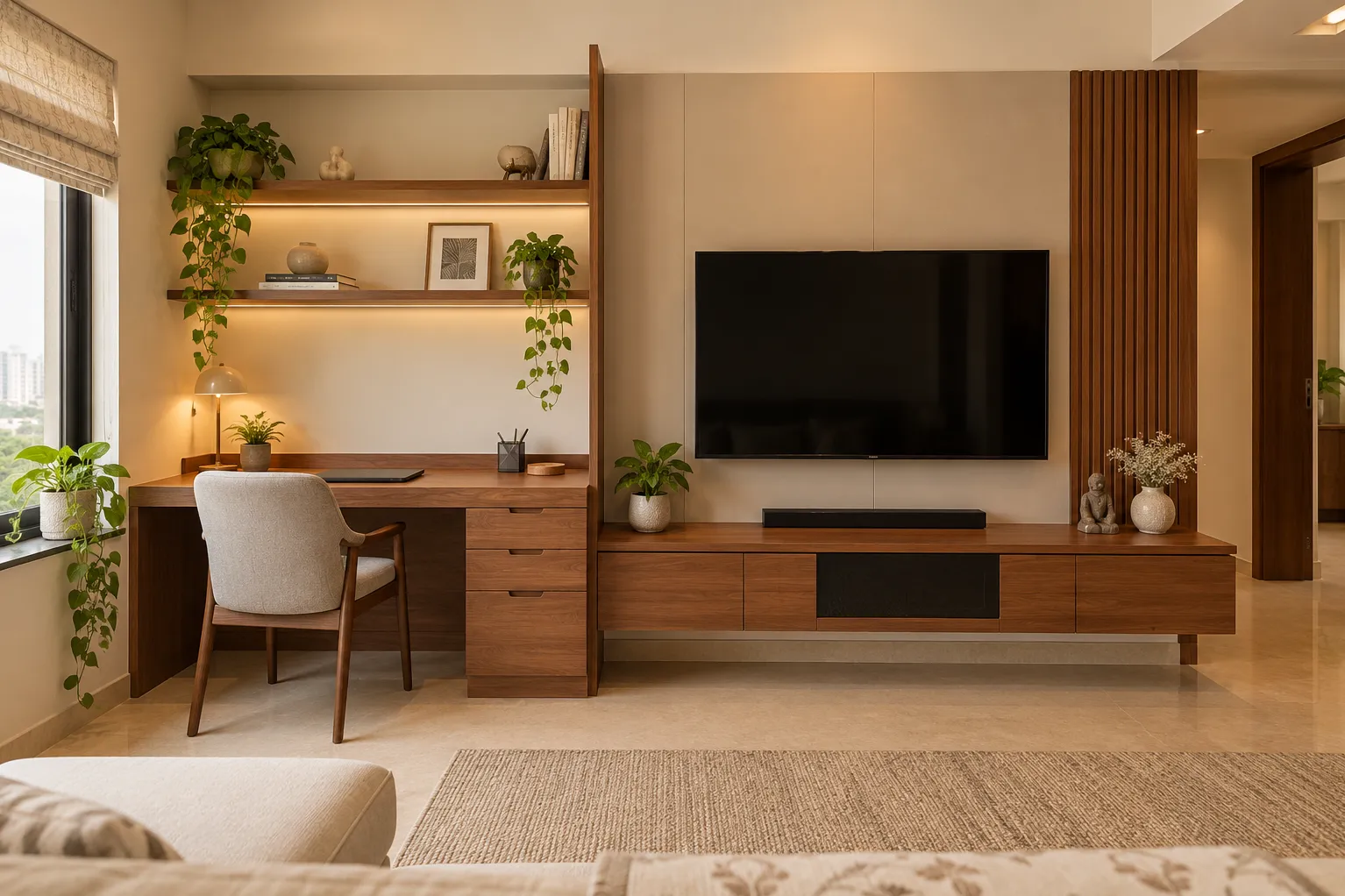
Study tables and TV units are often selected as separate pieces of furniture, even when they occupy the same living environment. In compact and medium-sized homes, planning them carefully can improve storage, circulation, cable management, and visual balance. Anyone considering a study table and TV unit in Chikhali should therefore evaluate how each unit will actually be used before approving the design.
Several common mistakes can reduce functionality even when the finished furniture looks attractive.
Mistake 1: Designing the Study Table Only Around Laptop Size
A laptop may fit on a narrow desk, but working or studying requires additional space for notebooks, books, stationery, chargers, and sometimes a second screen.
Desk depth and width should reflect the user's activities.
Children may require space for textbooks and handwriting, while adults working from home may need monitor placement and cable access. Designing around the device alone often produces a desk that feels cramped.
Mistake 2: Ignoring the Chair
The table and chair work as one ergonomic setup. Legroom should remain unobstructed, and drawers should not reduce comfortable seating width.
There should also be enough room behind the chair for movement.
In smaller bedrooms, the position of a nearby bed or wardrobe can determine whether a study chair can actually be pulled out comfortably.
Mistake 3: Poor Electrical Planning
Charging cables stretched across furniture quickly make a carefully designed interior look untidy.
Plan electrical points for computers, monitors, routers, chargers, lamps, televisions, streaming devices, speakers, and other equipment before manufacturing begins.
Accessible cable openings can help keep wiring organised without making future changes difficult.
Mistake 4: Making the TV Unit Too Large
A TV wall does not need to be covered completely with furniture.
Oversized panels, excessive shelving, and numerous decorative boxes can make a smaller living room appear crowded. The TV size, viewing distance, storage requirement, and wall proportions should determine the unit's dimensions.
A simpler arrangement may often provide better visual balance.
Mistake 5: Creating Storage Without a Purpose
Open shelves are attractive in design visuals, but every shelf eventually needs something to occupy it.
Before adding multiple niches, consider whether they will hold books, décor, devices, photographs, or everyday items. Closed storage can be preferable for objects that would otherwise create visual clutter.
Mistake 6: Forgetting Future Equipment Changes
Televisions, routers, gaming consoles, monitors, and work devices change over time. Furniture that is built too tightly around today's equipment can become restrictive later.
Allowing reasonable flexibility for cable access and device dimensions can extend the practical life of the unit.
This is particularly relevant for homeowners in Chikhali and the wider PCMC-Pune residential region, where a single room may serve several functions.
Lucky Modular Kitchen Interior develops modular home furniture for residential spaces across Pune, including study and entertainment units that can be configured around actual wall dimensions and user requirements.
Plan the Room, Not Just the Furniture
Before approving either unit, look at the entire room. Consider windows, natural light, seating, doors, walking paths, electrical outlets, and nearby storage.
A study table benefits from appropriate lighting and a relatively distraction-free position. A TV unit needs comfortable viewing and should not obstruct circulation.
For Maharashtra homeowners working with limited floor area, multifunctional planning can be particularly useful. A well-proportioned study table provides a comfortable work zone without consuming unnecessary space, while a restrained TV unit can organise electronics and storage without dominating the room.
Successful furniture design is often less about adding features and more about eliminating the details that interfere with everyday use.
Keywords